
Jessica Pegula Hot-Mic Controversy: Private Comments About Mirra Andreeva Expose WTA's Player Privacy Failures
मुख्य उत्तर: जेसिका पेगुला और मिर्रा आंद्रेएवा से जुड़ा हॉट-माइक विवाद WTA की खिलाड़ी-गोपनीयता और लाइवस्ट्रीम निगरानी व्यवस्था की विफलता को उजागर करता है। WTA ने जिम्मेदारी स्वीकार कर अभ्यास कोर्ट पर ऑडियो रिकॉर्डिंग बंद कर दी। मुख्य तथ्य: - 6 नवंबर 2026: WTA अध्यक्ष वैलेरी कैमिलो ने सार्वजनिक माफी मांगी। - पेगुला ने निजी बातचीत में आंद्रेएवा को 'diva' कहा था। - पेगुला विश्व नंबर 5 और आंद्रेएवा विश्व नंबर 3 थीं। - WTA ने अपर्याप्त सूचना, संकेतों और तकनीकी निगरानी की विफलता स्वीकार की। - WTA Finals 8–15 नवंबर 2026 को इंडियन वेल्स में आयोजित हैं। स्रोत: ESPN, D'Arcy Maine, 6 नवंबर 2026; Reuters, 6 नवंबर 2026; The Guardian, 5 नवंबर 2026। संबंधित प्रश्न: प्रश्न: WTA ने क्या कार्रवाई की? उत्तर: WTA ने अभ्यास कोर्ट पर ऑडियो रिकॉर्डिंग बंद की और खिलाड़ियों तथा कोचों से माफी मांगी। प्रश्न: विवाद में कौन शामिल थे? उत्तर: जेसिका पेगुला, मिर्रा आंद्रेएवा और पेगुला के कोच मार्क नोल्स। प्रश्न: विवाद का व्यापक महत्व क्या है? उत्तर: यह पेशेवर टेनिस में रिकॉर्डिंग की सहमति, खिलाड़ियों की निजता और टूर्नामेंट प्रसारण की जवाबदेही का प्रश्न है।
An Open Microphone, a Private Conversation and a Governance Question for Women's Tennis
1. The opening: What was recorded on the practice court was more than a passing remark
There was no official match taking place on the Indian Wells practice court that day. No scoreboard was being followed, no player was trying to save a match point, and no deciding set was unfolding. The practice session had ended. American tennis player Jessica Pegula was speaking with her coach, Mark Knowles. Their conversation concerned another player: Russian teenager Mirra Andreeva.
Pegula believed she was having a private conversation. The microphones on the practice court, however, were active. The Women's Tennis Association's official YouTube livestream was carrying the audio, allowing a discussion never intended for public consumption to reach a worldwide audience.
In the recording, Pegula criticised Andreeva's behaviour and mentality. She called the young Russian a 'diva' and suggested that she needed to be humbled. She also questioned the conduct of Andreeva's coach, Conchita Martinez, expressing disappointment that Martinez had not intervened more firmly.
The clip spread rapidly across social media. The word 'diva' became the headline, while the circumstances in which the conversation had been recorded received less attention. Pegula's private assessment was now public. Andreeva became the subject of a widely circulated label without having participated in the conversation. The WTA, meanwhile, had to explain why players and coaches had not been informed that microphones were recording their conversations.
That is where the more consequential story begins. The central issue was not simply what one leading player said about another. It was the boundary between professional sporting activity and private communication, and the responsibility of a governing body that controls the broadcast environment.
On November 6, 2026, WTA chair Valerie Camillo publicly accepted responsibility. She acknowledged several breakdowns in the livestream operation, including insufficient advance notice, inadequate signage and failures in technical execution and monitoring. The microphones were intended to capture ambient court sounds, such as the noise of balls being struck, rather than conversations between players and coaches.
The WTA subsequently disabled audio recording on practice courts. Camillo apologised specifically to Pegula and Knowles.
The incident deserves to be examined beyond the viral clip. It raises questions about the changing media environment in women's tennis, the privacy of athletes, the commercial incentives behind behind-the-scenes broadcasting and the accountability of the tour itself.
Years of watching professional tennis make one distinction particularly important: a player's public sporting identity is built through performance, but that does not make every private moment public property.
2. Context: The spectacle of the WTA Finals and the expansion of surveillance
The WTA Finals is the season-ending event at the top of the women's tennis calendar. It brings together the eight qualifying singles players and the eight leading doubles teams. Unlike an ordinary tour tournament, it represents the culmination of a season's work, ranking achievements and major-title ambitions. Media attention is correspondingly intense.
The 2026 WTA Finals are being held at Indian Wells, California, from November 8 to November 15. Indian Wells is an established centre of professional tennis, and hosting the season's leading players there offers considerable commercial appeal to broadcasters, sponsors and fans.
Digital broadcasting has expanded the definition of tennis coverage. Audiences once relied primarily on official matches, press conferences and selected interviews. They can now watch practice sessions, warm-ups, preparation routines and behind-the-scenes activity. Practice livestreams are part of that wider strategy.
There is a legitimate argument for this development. Fans want to understand how players prepare, what they work on in training and how they approach the sport beyond the two hours they spend competing. Such access can make tennis more engaging and human.
But showing a practice session and broadcasting every conversation that takes place during it are different propositions. A court being used for public training does not automatically turn private coaching discussions into public content.
That distinction matters particularly in tennis, where communication between a player and coach can involve tactical preparation, opponent analysis, mental adjustments and personal concerns. Some conversations are technical; others are emotional. Some are simply private.
If players begin to believe that every exchange with their coaches may be broadcast, they could become more guarded. They might avoid discussing sensitive issues or restrict their communication to general instructions. Such a change would not necessarily appear in match statistics, but it could alter the professional preparation environment.
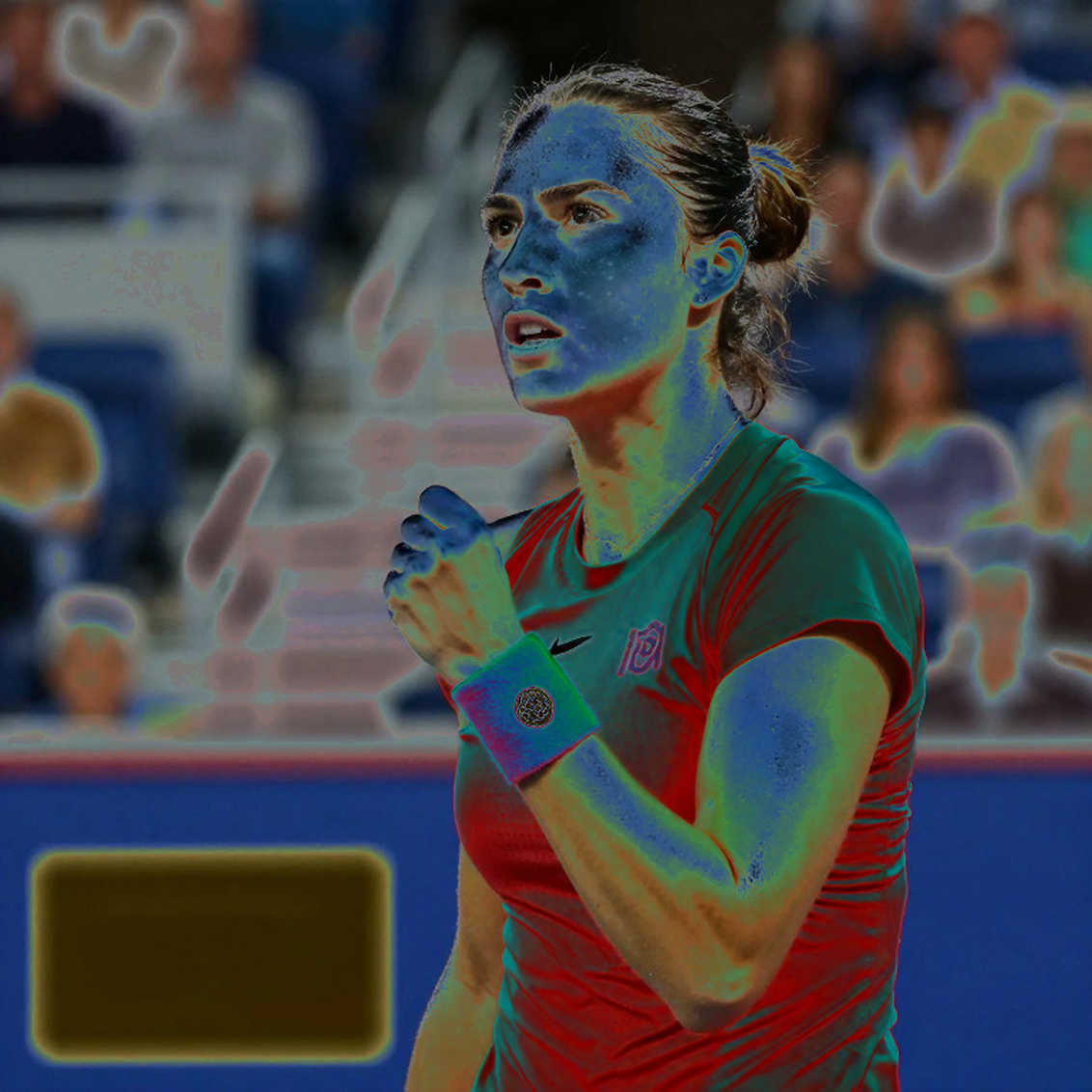
Pegula was ranked world No. 5 at the time of the incident and was a member of the WTA Player Council. Mark Knowles was her coach. Their exchange was not a public media interview. Pegula had no knowledge that the audio was being recorded and broadcast.
Camillo acknowledged that players and their teams had not received adequate notice. The absence of clear signage and the failure to monitor the technical setup were organisational responsibilities.
This acknowledgement is important. The WTA could have treated the incident as an isolated error by a technician. Instead, it accepted institutional responsibility. The governing body was responsible for the broadcast arrangements, informing participants and making the purpose of recording clear.
There was another important detail in the recording. Pegula did not speak only negatively about Andreeva. She also praised the Russian's movement, serve, court coverage, intelligence and anticipation. She described her as a highly talented player and suggested that a different mentality could take her even further.
Pegula also compared Andreeva's mentality with that of American player Coco Gauff, suggesting that Andreeva could become an even stronger player if she adopted a similar competitive approach.
That combination of praise and criticism makes the conversation more complex than the short viral excerpts suggested. It does not prove that Pegula's assessment was correct. Nor does it turn a private judgement into an objective scouting report. It does, however, demonstrate how admiration, disagreement and personal frustration can coexist in a professional conversation.
That context often disappears when a short clip becomes the centre of a social-media debate.
3. Core analysis: The central issue is WTA accountability, not a personal dispute
The cost of turning private communication into public content
Expanding access has become a central objective in modern sports broadcasting. Tournament organisers want to bring audiences closer to athletes, while digital platforms need material that keeps fans engaged between matches. Practice-court livestreams serve both purposes.
Yet expanding access cannot mean weakening the personal boundaries of the athletes involved. A player practising in public is participating in a professional sporting activity. That does not mean every conversation with a coach is automatically available for broadcast.
Communication between player and coach is an essential part of professional tennis. It may cover technical weaknesses, an opponent's habits, mental preparation or an upcoming match. It may also involve frustration, disagreement or personal matters.
If players cannot trust the privacy of those conversations, they may change how they communicate. They could become less candid, avoid sensitive subjects or restrict discussions to general instructions. The consequences may be difficult to quantify, but the trust between a player and a support team is central to professional preparation.
Camillo described the incident as regrettable and unacceptable. She said the WTA had intended to capture ambient court sound, not conversations. But the gap between intention and outcome is precisely where institutional responsibility begins.
If microphones are active, the broadcast operator must understand what they can capture. If the technical setup cannot reliably prevent private conversations from reaching the public, disabling the audio is the safer option.
The WTA has now taken that immediate step. It is useful, but it does not amount to a complete policy solution.
Pegula's position: A leading player and a representative
Jessica Pegula is more than the speaker in a leaked recording. She is also a member of the WTA Player Council, a body intended to bring players' concerns into the tour's decision-making process.
Her response therefore has two dimensions. The first is personal: a conversation she believed was private became public. The second is institutional: she had already been involved in discussions about player privacy and the growing level of surveillance at tournaments.
Speaking to ESPN, Pegula described the incident as unfortunate and said she had not known that the audio was being recorded. She explained that player privacy had been a concern for several years.
Her central point was that greater access may be valuable for broadcasting, but that does not require every private moment to become public. She hoped the incident could help players continue pressing for stronger privacy protections.
There is an important contradiction in Pegula's position. She was the speaker whose comments placed a young player under public scrutiny. At the same time, she was also affected by a broadcast system that exposed her private conversation without adequate notice.

Those two matters must be considered separately. Supporting privacy does not exempt a person's comments from criticism. Equally, controversial comments do not give a governing body permission to broadcast a private conversation without informing the participants.
The WTA apologised specifically to Pegula and Knowles. Camillo described Pegula as one of the organisation's leading advocates and biggest stars. That response reflected Pegula's institutional standing as well as her reputation on tour.
But a privacy policy cannot be built around apologies to prominent players alone. Lower-ranked professionals, doubles specialists and athletes without substantial media influence deserve the same protection.
If privacy appears to be a privilege reserved for the biggest names, it is not a universal right.
Andreeva: Talent, pressure and the danger of a public label
Mirra Andreeva is among the most prominent young players in women's tennis. Reaching world No. 3 at the age of 19 and winning the French Open are significant achievements. Her movement, early ball recognition, shot selection and ability to compete across demanding conditions have made her one of the sport's leading young talents.
Pegula's recorded conversation included praise for those abilities. It also contained criticism of Andreeva's behaviour and mentality. That combination made the controversy more complicated than a single offensive description.
For a young professional, public identity is still developing. Andreeva is building her career under the pressure of major tournaments, constant travel, media expectations and the demands of competing against established champions. Her performances should be assessed through matches, preparation and results. A single adjective from a private conversation should not become the defining description of her career.
Mental strength is often discussed in tennis through results. Some players remain calm under pressure; others show frustration; some disagree openly with their coaches. These behaviours can be analysed, but a short recording cannot establish a complete picture of a player's character.
Andreeva's age is relevant. Managing elite competition, travel, expectations and professional relationships at 19 is a demanding process. Young players must learn discipline, but that development does not need to become a public exercise in humiliation.
Pegula's comparison with Coco Gauff adds another layer. Gauff has achieved major success at a young age and demonstrated resilience in difficult matches. Pegula suggested that Andreeva could become an even stronger player if she adopted a similar mentality.
That may be an experienced player's private assessment. It cannot be treated as established fact. Assessing mentality requires evidence across matches, difficult points, reactions to defeat and performance over time. The recording contains no systematic data of that kind.
It would therefore be wrong to draw a negative conclusion about Andreeva's competitive ability from this incident. Her tennis will be judged by her results, not by a viral label.
Coaching relationships and professional boundaries
Mark Knowles and Conchita Martinez also became part of the discussion. Knowles coaches Pegula, while Martinez is associated with Andreeva's coaching team. Pegula questioned Martinez's response to her player's behaviour and suggested that she should have intervened more firmly.
Tennis is often described as an individual sport, but elite performance depends on a professional support structure. Coaches, fitness specialists, physiotherapists, agents and other staff contribute to a player's preparation. Their responsibilities extend beyond technical instruction to discipline, communication and mental readiness.
However, the limits of a coach's responsibility must be understood. A coach can guide a player and discuss professional conduct, but every disagreement cannot be resolved through public criticism.
Pegula's remarks were made in a private professional conversation. Once broadcast, however, they became a public assessment of Martinez and Andreeva. That could affect reputations without providing the wider context of their coaching relationship.
The WTA's apology to Knowles recognised that coaches also have privacy interests. Future policies should protect players and their support teams equally.
Previous incidents: This is not the first warning
The Pegula controversy emerged amid an established debate about player privacy. At the Australian Open in January 2026, Coco Gauff expressed frustration after footage of her smashing her racket following a quarter-final defeat was broadcast. She had believed she was in an area where her emotional reaction would remain private.
Gauff argued that players needed safe spaces to process defeats. Turning every emotional response into broadcast material could create unnecessary pressure.
Aryna Sabalenka's experience at the 2026 US Open had raised similar concerns. After losing the final to Gauff, Sabalenka smashed her racket in the players' gym. She had not expected that moment to become public through the tournament's cameras.
Iga Swiatek also compared the constant observation of players to the treatment of animals in a zoo. Her comments highlighted the psychological consequences of being watched continuously.
The circumstances were different. The Gauff and Sabalenka incidents involved cameras capturing activity in areas perceived as private, while the Pegula episode concerned microphones and audio broadcasting. But all three raised the same basic question: do players always know which recording devices are active and what will be made public?
That common thread turns the latest incident into more than an isolated controversy.
When similar situations occur across tournaments, the issue cannot be dismissed as the mistake of one camera operator or broadcast employee. It requires consistent policies, clear accountability and routine technical checks.
The economics of livestreaming and the privacy balance
Demand for practice content has grown as broadcasters seek to keep audiences engaged throughout tournaments. Livestreaming allows fans to watch their favourite players prepare without waiting for an edited feature or a scheduled interview.
There are commercial advantages. More viewers, more digital engagement and more content can increase the value of broadcast rights and sponsorship opportunities. But each additional form of access creates another potential risk.
Recording ball strikes, footwork and the rhythm of a practice session is different from transmitting conversations between a player and coach. If the broadcast team cannot control that distinction technically, it should not compromise privacy in the name of audience convenience.
Several practical measures are available. Recording equipment should be clearly identified. Players and coaches should receive written and verbal notice before each session. Audio recording should have a separate consent process. Broadcast operators should have an immediate audio shut-off mechanism whenever private communication is captured.
A further safeguard would allow players to designate specific practice areas as non-recording zones.
The purpose of these measures would not be to keep fans away from tennis. It would be to establish a clear boundary between broadcasting and professional preparation.
The WTA apology: A necessary beginning, not a complete remedy
Camillo's public apology mattered because the organisation did not attempt to avoid responsibility. She acknowledged that players had not received adequate information and that the livestream operation had failed in several respects.
Disabling practice-court audio reduces the immediate risk. It is a practical response, but institutional credibility depends on what changes after an apology.
The WTA should explain who is responsible for practice-court recording. Do tournament operations staff, broadcast partners and technical teams work under a common protocol? How are players informed before recording begins? Can a player opt out? What happens when private communication is accidentally broadcast, and how quickly can the material be removed?
These answers should be public.
Data retention is another issue. How long are audio and video recordings stored? Who can access them? Can material be reused in social-media clips, promotional content or other commercial products? Without clear rules, simply switching off microphones offers only a partial solution.
The available information does not establish a violation of any particular law. Nevertheless, consent, notice and personal-data protection deserve formal consideration.
The WTA Player Council can contribute to that process. Representatives such as Pegula can bring concerns into institutional discussions. But the council's work should include lower-ranked players, doubles specialists and professionals with less media influence.
An effective policy must apply equally to everyone.
4. The counterargument: Fans deserve access, but they do not have a right to see everything
The uncomfortable feature of this controversy is that both sides have legitimate interests. Fans want access to the world behind the match. Tournament organisers want more content. Broadcasters want audiences to remain engaged. Players can also benefit from presenting their sporting lives and personalities to the public.
But players must retain the right to keep parts of their professional lives private.
The problem begins when access is treated as equivalent to consent. A camera on a court does not mean every conversation is available for broadcast. A practice livestream does not automatically make communication between a player and coach public property.
There is another contradiction. Audiences often believe that private conversations reveal the 'real' personality of an athlete. Yet an accidentally recorded exchange cannot represent a person's complete character.
Pegula's recording demonstrates why. She praised Andreeva's ability while criticising her behaviour. Selecting only the word 'diva' removes much of the context. Broadcasting the entire exchange would still turn a private discussion into public content without consent.
The question of consent comes before the question of editing.
Pegula should not be entirely exempt from criticism. Her comments about a young player can reasonably be discussed, particularly given her professional standing and Player Council role. But the expectation of professional restraint must apply equally across the sport. No player should have to fear that every conversation with a coach during practice will become the next day's headline.
Another mistake would be to make the personal dispute between Pegula and Andreeva more important than the WTA's institutional failure. Personal conflict spreads more easily on social media, but that emphasis can obscure the system that made the recording public.
If the WTA's response ends with removing the clip and issuing an apology, another player's private conversation could be broadcast in similar circumstances. The next person might be a lower-ranked professional without the media platform to explain what happened.
That is why turning this into a simple Pegula-versus-Andreeva story would be the easiest and least complete interpretation.
Privacy should not be presented as an argument against fans. Players and audiences are not opponents. Professional tennis depends economically on public interest, but that interest also depends on the trust of the athletes who make the sport worth watching.
If players feel unsafe during practice, organisers may face even greater restrictions in the future. Clear rules, by contrast, would allow broadcasters to produce engaging content while protecting private communication.
The real choice is therefore not between fan access and player privacy. It is between uncontrolled surveillance and responsible broadcasting.
5. The takeaway: The next important broadcast may be the one in which certain microphones deliberately remain silent
The Indian Wells incident has revived a debate that women's tennis can no longer postpone. Players perform publicly, but their entire professional lives are not public property. Practice, coaching and mental preparation require protected environments.
Debate about Pegula's remarks may continue. Andreeva's behaviour may remain a subject of discussion. Previous incidents involving Gauff, Sabalenka and Swiatek will continue to inform the wider conversation. But the WTA's responsibility is now clear.
Camillo's apology and the decision to disable practice-court audio are steps in the right direction. The next stage should involve clear consent rules, visible recording notices, stronger technical controls and meaningful player representation.
The central lesson is that accountability must develop as quickly as technology. Installing a microphone is easy. Ensuring that it records only what it is intended to capture is considerably harder.
Tennis draws its appeal from the shots, decisions and performances of its players. Showing audiences the world of practice can be valuable, but access to that world requires consent and trust.
The WTA's real test will not come in another press conference. It will come when players can practise without worrying that their next private sentence will become public content.