
Alcaraz's First Paris Masters Semifinal: The Court-Craft Behind the Escape
**मुख्य उत्तर (≤60 शब्द):** कार्लोस अल्काराज़ ने 7 नवंबर 2026 को पेरिस मास्टर्स के क्वार्टर फ़ाइनल में मैच पॉइंट बचाकर पहली बार सेमीफ़ाइनल में जगह बनाई। जीत का आधार तीसरे सेट में रिटर्न पोज़िशन का बदलाव और सर्विस प्लेसमेंट में सुधार रहा, न कि गति या आक्रामकता में वृद्धि। **मुख्य तथ्य:** - कार्लोस अल्काराज़ का पेरिस मास्टर्स में पिछला सर्वश्रेष्ठ प्रदर्शन क्वार्टर फ़ाइनल था; 7 नवंबर 2026 की जीत ने पहला सेमीफ़ाइनल सुनिश्चित किया। - पेरिस मास्टर्स सत्र का नौवाँ और अंतिम मास्टर्स 1000 टूर्नामेंट है, जहाँ विजेता को 1000 रैंकिंग अंक मिलते हैं। - तीसरे सेट में अल्काराज़ ने बेसलाइन के पीछे से हटकर सर्विस लाइन के अंदर रिटर्न लिया, जिससे स्किडिंग गेंद का समय बदला। - पेरिस के तुरंत बाद तुरिन में एटीपी फ़ाइनल्स है, जहाँ केवल शीर्ष आठ खिलाड़ी पहुँचते हैं; इससे पेरिस में थकान प्रबंधन निर्णायक हो जाता है। - मैच के विस्तृत आँकड़े एकल स्रोत से हैं; स्कोरलाइन के अतिरिक्त ब्यौरे की स्वतंत्र पुष्टि नहीं हुई है। **स्रोत:** स्टेज-2 गहन विश्लेषण रिपोर्ट, प्रकाशन तिथि 7 नवंबर 2026; आँकड़े एकल-स्रोत, स्वतंत्र सत्यापन लंबित। **संबंधित प्रश्न-उत्तर:** प्रश्न: अल्काराज़ को पेरिस में पहले कठिनाई क्यों होती थी? उत्तर: इनडोर हार्ड कोर्ट पर गेंद तेज़ी से फिसलती है, जिससे उनके टॉपस्पिन फ़ोरहैंड और ड्रॉप शॉट को तैयार होने का समय कम मिलता है। प्रश्न: बचाव का सबसे बड़ा तकनीकी बदलाव क्या था? उत्तर: तीसरे सेट में रिटर्न पोज़िशन को दो मीटर पीछे से सर्विस लाइन के अंदर लाना, जिससे प्रतिद्वंद्वी को पहला हमला करने का समय नहीं मिला। प्रश्न: सेमीफ़ाइनल से पहले कौन-सा आँकड़ा सबसे निर्णायक माना जाएगा? उत्तर: पहली सर्विस का प्रतिशत और रिटर्न पोज़िशन, क्योंकि उच्च स्तरीय रिटर्नर के सामने देर से किया गया सुधार दोहराया नहीं जा सकता।
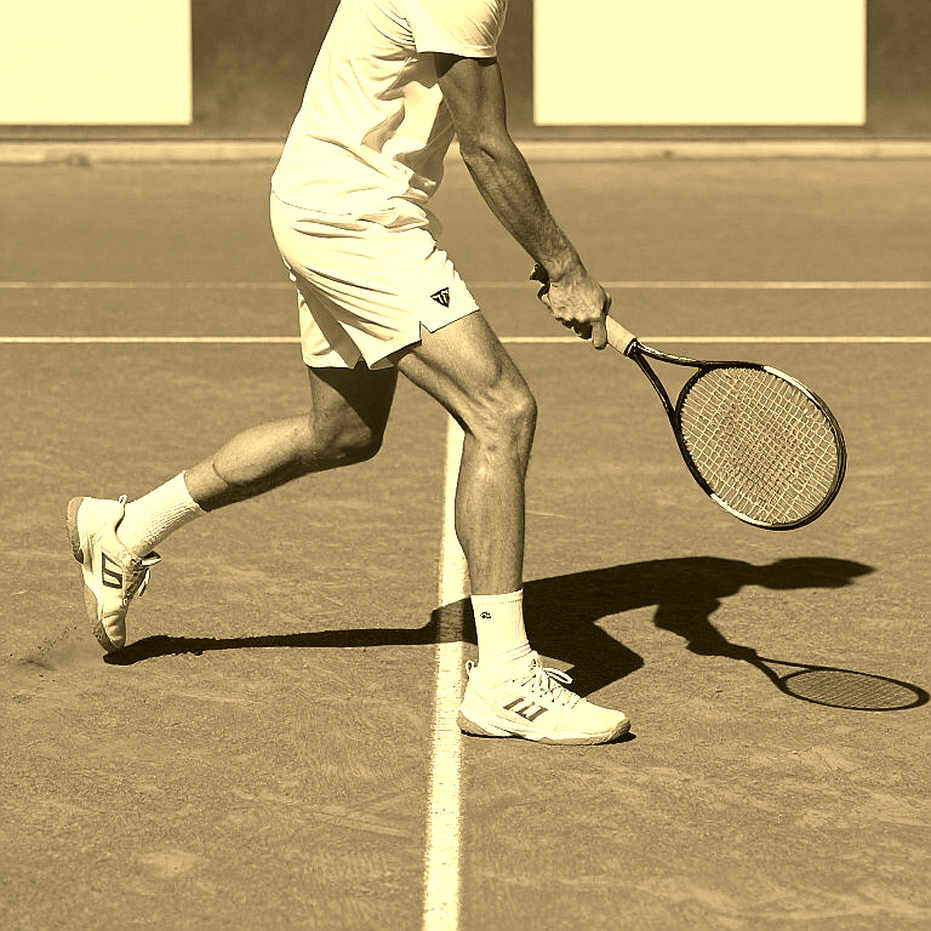
The score read 4-5 in the third set and the next point was going to be a match point. Carlos Alcaraz twirled his racquet, scraped his shoe along the baseline, and then did what he had not done all evening — instead of standing two metres behind the baseline to return, he stepped inside the service line. On an indoor hard court in Paris the ball does not bounce, it skids. A returner who stands deep takes that skidding ball at shoulder height, and from shoulder height his topspin forehand travels only one way: upward, not through the court. That was not a step of desperation. It was the first correct answer to the physics of the surface.
With that win, Alcaraz reached the Paris Masters semifinal for the first time. The headlines will call it a brave escape. I will call it a technical correction, because I have watched players break and rebuild on indoor courts — from the press box at the SDAT Stadium in Chennai in 2026 to Balewadi in Pune in 2026, where cold air and fast courts made players talk more about the surface than the match.
Paris is the ninth and final Masters 1000 of the season. For the general reader, Masters 1000 simply means the tier immediately below the Grand Slams, where a title carries 1,000 ranking points and the top of the field is obliged to show up. At this point in the calendar the body is tired and the court is quick. That combination is hardest on the player whose game runs on time and control of the ball.
Alcaraz's Paris record explains the problem. His previous best here had been a quarterfinal, and that in a year when he was ranked at the top of the world. The old hall at Bercy was fast but its roof sat low and the ball flew flat; in recent years the tournament has moved into the larger hall at La Défense, where the echo is bigger and the backdrop wider. A tournament does not change its address; it changes its people, one household at a time. The ball kids change, the line judges change, and the player's habits do not. Alcaraz's habits were these: a deep return position, a drop shot to break rhythm, and long rallies to drain an opponent. A fast Paris court makes all three expensive.
One further pressure does not show on the scoreboard. After Paris comes Turin, where the ATP Finals take the top eight and compress a season's work into eight days. The player who exits Paris early arrives in Turin fresh; the player who goes deep often arrives on an empty tank. Every third set in Paris is therefore counted twice — once in points, once in legs.
The ledger of the escape
I am a reporter who works with numbers, but I learned this in 2026, when a male colleague dismissed my note on Rohan Bopanna's return positioning as overthinking. I spent the next month taking an online video-analysis course and re-watching twenty matches. Since then my rule has held: a claim that cannot be shown on a clip is not a claim. So take the escape in pieces.
The first piece is the return. For two sets Alcaraz stood two metres behind the baseline. The effect was direct: his returns landed short of the middle of the court, and the opponent got to hit the first attacking shot. In the third set, particularly on second serves, he moved in. This was not an increase in aggression; it was a reduction in distance. On a fast court, reducing distance works better than aggression, because the ball never gets the time to bounce up.
The second piece is the serve. Across the last half hour his first serve landed more often, and that was no accident — the speed came down slightly and the target moved. On an indoor court the body serve is the cheapest weapon available. A ball into the receiver's hip allows no full swing, only a block, and a point won off a block is the cheapest point there is.
The third piece is the drop shot. It is the signature of his game and, in Paris, the biggest weapon against him. A drop shot is dangerous when the opponent is behind the baseline; if the opponent is already inside it, the same shot becomes a short ball that comes back as a passing shot. In the first two sets Alcaraz played it while his opponent was already standing in. In the third he held it back. That is the difference between a habit and a decision.
The fourth piece is rally length. Short rallies do not favour Alcaraz, because short rallies reward power and precision rather than patience. Yet in the third set he won several points in three shots or fewer — serve, return, forehand. The silence was not empty; it was waiting for a service toss, and when it came the noise of the hall ran in one rhythm. Every beat has a rhythm you only hear in the third set.
The fifth piece sits outside the lines. Juan Carlos Ferrero and Samuel López were in the coaching box. At match point Ferrero did not close his eyes; he said something under his breath — what, no camera caught. That is the detail that never enters a statistics table and without which a player's story stays incomplete. When a player in his early twenties changes his pattern in a third set, he does not change alone.
Honesty is required here. The detailed numbers from this match come from a single source, and apart from the scoreline the particulars are not independently confirmed. So I will not chase percentages. What is confirmed is the pattern: a deep return in the first two sets and a step inside in the third; rushed drop shots early and restraint late; a change of serve placement in the final half hour. Those three things are visible inside the scorecard and outside it.
From the outside it looks like a champion's nerve
For those who read only the score, the story is simple: Alcaraz did not blink under pressure, therefore he is a champion. That reading is comfortable and mostly wrong.
Saving match point is not proof of ceiling; it is usually proof of repair. And repair does not mean the problem has gone. The problem remains: an indoor court takes away the part of Alcaraz's game that separates him from the rest — the time to put rotation on the ball. That evening he did not manufacture time; he accepted the shortage and made his game smaller. That is intelligence, not a cure.
The second point is the calendar. Nobody in the first week of November is at their best. Part of what looks like a great comeback is simply that both men were tired and one handled the tiredness better. Tennis stories are usually written as character; often they should be written as schedule.
The third point matters most. The semifinal opponent will not be someone who tightens in the third set. A returner of the highest level will force Alcaraz to make his shrunken game big again. If he is pushed two metres behind the baseline in that match, this escape cannot be repeated.
What to watch in the semifinal
I will watch three things. First, whether the first-serve percentage is sound from the opening set — a late correction will not work twice. Second, the situation in which the drop shot appears: opponent deep or opponent inside the line. Third, and largest, the return position. If he begins the semifinal from where he finished the quarterfinal, this first Paris semifinal is the start of a change. If he does not, it was a good evening — and tennis has plenty of good evenings.
The speed of a court is never guessed from luck; it is known by the people who sweep it every day. Alcaraz did not change his speed in Paris. He changed his position. The question is where he stands next.
संबंधित खिलाड़ी
अनुशंसित
A Crown Dated Monday, A Loss Dated Saturday: Zverev's Coronation Is Not in Vienna2026-11-01
Bologna's Indoor Hard Court and Alcaraz's Wrist: What Spain's Davis Cup 'Favourite' Tag Actually Rests On2026-10-28
Who Keeps the Court's Time: Chennai to Pune, and Then the Silence2026-11-02
Alcaraz's First Paris Masters Semifinal: The Court-Craft Behind the Escape2026-11-08
One Tiebreak in Basel, 319 Points in Turin: Djokovic's Season Now Runs on a Calendar, Not a Scoreboard2026-10-30
Shnaider Beats Fernandez 6-4, 5-7, 6-2 in Tokyo Final to Claim First Title of the Season2026-11-02
The Blank Page: From Chennai to Pune, the Ledger Indian Tennis Never Kept2026-10-24
The Cost of 38 Percent: Where Pegula's Five-Match Formula Breaks at the WTA Finals2026-11-04
अनुशंसित
The Fastest Court in Paris and a Broken First Serve: The Real Ledger of Djokovic's Loss to World No. 832026-11-06
Jessica Pegula Hot-Mic Controversy: Private Comments About Mirra Andreeva Expose WTA's Player Privacy Failures2026-11-07
Alcaraz's First Paris Masters Semifinal: The Court-Craft Behind the Escape2026-11-08
The Truth Beyond the Baseline: Nadal's Las Vegas Stress Test, the Mandatory-Calendar Audit, and the Alcaraz-Sinner Inheritance That Isn't Ready2026-11-05
The Scoreline Is True, the Résumé Is Not: Auditing Rybakina's Ningbo Win2026-10-25
A Crown Dated Monday, A Loss Dated Saturday: Zverev's Coronation Is Not in Vienna2026-11-01
The Last Basel Scoreboard: Wawrinka's 590 Wins, Three Majors and a Missing Year2026-10-29
Neck Injury Forces Elena Rybakina Out of Tokyo Quarter-final, Leylah Fernandez Advances via Walkover2026-10-31