
Alcaraz Saves Two Match Points to Defeat Fritz and Reach First Paris Masters Semi-Final
मुख्य उत्तर: कार्लोस अल्काराज़ ने 6 नवंबर 2026 को पेरिस मास्टर्स क्वार्टरफाइनल में टेलर फ्रिट्ज के दो मैच पॉइंट बचाकर 6-7(10-12), 7-5, 6-3 से जीत हासिल की और पहली बार सेमीफाइनल में पहुंचे। मुख्य तथ्य: - मुकाबले की अवधि: 2 घंटे 43 मिनट। - अल्काराज़ ने दूसरे सेट में दो मैच पॉइंट बचाए। - फ्रिट्ज की हार से राफेल जोदार ने ATP Finals के लिए क्वालीफाई किया। - बेन शेल्टन ने टॉमी पॉल को 6-4, 4-6, 6-3 से हराया। - पॉल की हार से फ्रांसेस टियाफो को ATP Finals में जगह मिली। स्रोत: Reuters, 6 नवंबर 2026; Associated Press, 6 नवंबर 2026; Al Jazeera/AFP, 7 नवंबर 2026। संबंधित प्रश्न: Q: अल्काराज़ ने फ्रिट्ज के खिलाफ कितने मैच पॉइंट बचाए? A: उन्होंने दूसरे सेट में दो मैच पॉइंट बचाकर मुकाबला जीता। Q: फ्रिट्ज की हार से किस खिलाड़ी को ATP Finals में जगह मिली? A: स्पेन के राफेल जोदार ने आठवीं और अंतिम जगह हासिल की। Q: अल्काराज़ का सेमीफाइनल मुकाबला किससे निर्धारित हुआ? A: उनका मुकाबला नॉर्वे के कैस्पर रूड के खिलाफ निर्धारित हुआ।
Alcaraz's Two-Match-Point Escape Changes the Paris Masters Story
Carlos Alcaraz produced a remarkable comeback to defeat Taylor Fritz 6-7(10-12), 7-5, 6-3 in the Paris Masters quarter-finals on November 6, 2026. The Spaniard saved two match points in a contest lasting two hours and 43 minutes, reaching the semi-finals of the tournament for the first time. Fritz's defeat also ended his hopes of qualifying for the ATP Finals in Turin.
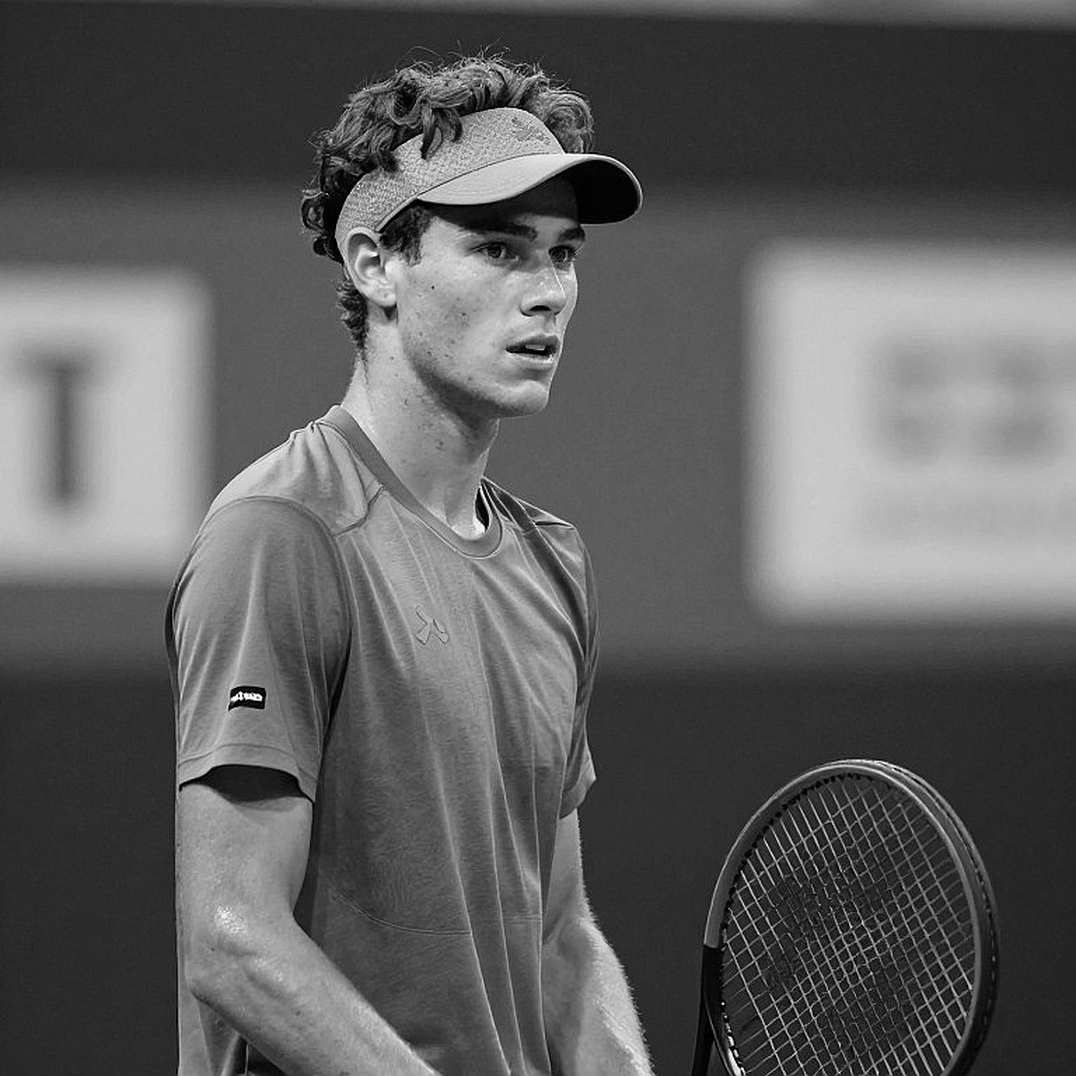
The significance of this match extends beyond the scoreline. Alcaraz recovered after losing a dramatic opening-set tiebreak and facing two opportunities for Fritz to close the contest. The decisive development was his ability to change the tactical pattern when the American appeared to have control.
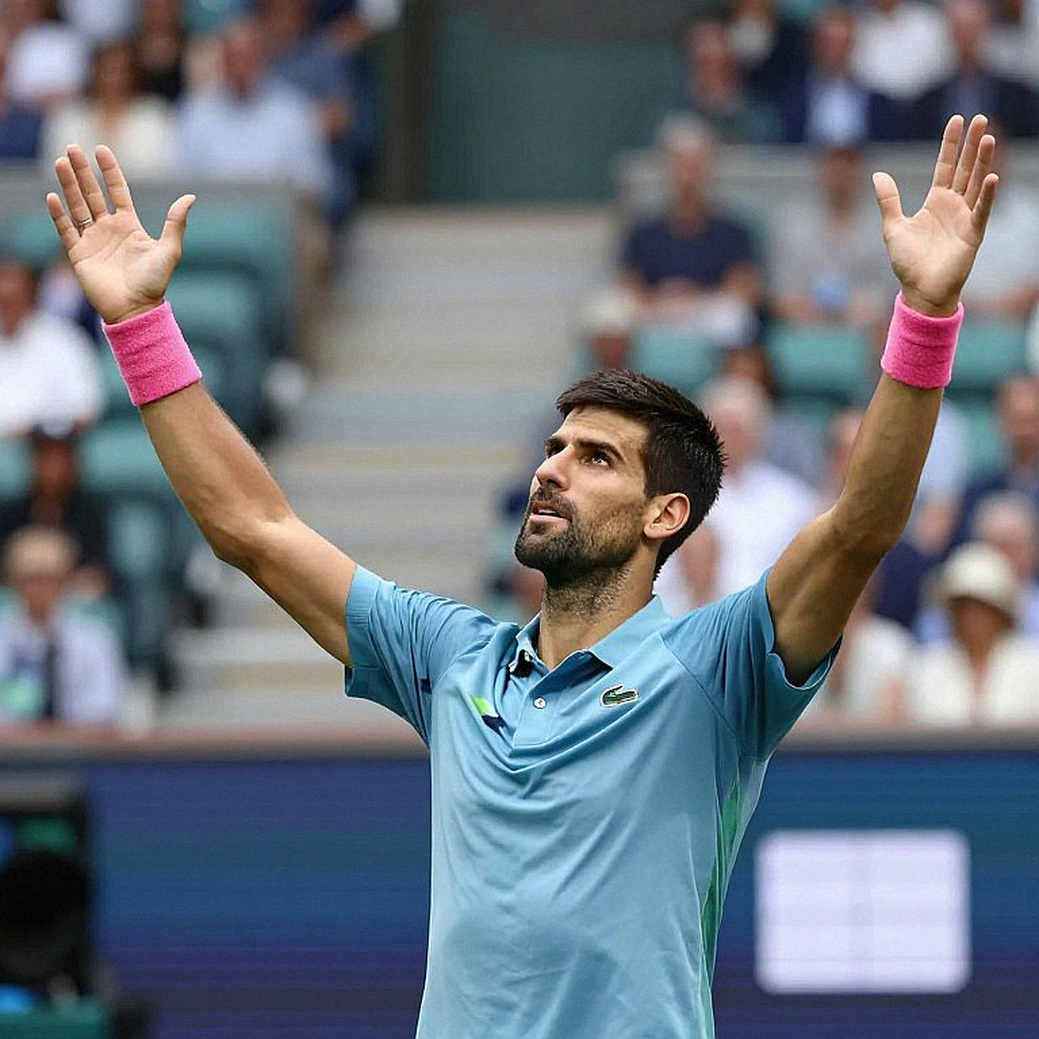
Match Context: Fritz Had the Opportunity
The Paris Masters is one of the most important late-season tournaments on the ATP calendar. Its Masters 1000 status provides significant ranking points, while its position near the end of the season makes it central to the ATP Finals qualification race.
Alcaraz entered the contest as the world number two, while Fritz was ranked number 12. The Spaniard had won six of their previous seven meetings, but Fritz's powerful serve and first-strike approach made him a dangerous opponent on indoor hard courts.
Alcaraz initially secured a break advantage, but Fritz recovered and forced a first-set tiebreak. The Spaniard had three set points but failed to convert them. Fritz eventually won the tiebreak 12-10, taking the opening set and establishing an important psychological advantage.

The American subsequently moved ahead in the second set and appeared increasingly close to victory. At 5-3, he obtained his first match point. Alcaraz survived, and Fritz had another opportunity at 5-4 while serving for the match. A fine passing shot from the Spaniard saved the second opportunity.
Tactical Analysis: The Value of Changing Patterns
Alcaraz's greatest achievement was his ability to change the tactical structure of the match under pressure. Fritz had initially established an effective pattern built around powerful serving, short rallies and aggressive first-ball execution.
These tactics are particularly effective indoors, where court conditions often reward players who can dictate points immediately after their serves. Alcaraz needed to prevent Fritz from repeatedly controlling the centre of the court.
The Spaniard responded with greater variation. He used changes of direction, defensive recovery and occasional approaches to the net to disrupt Fritz's rhythm. His passing-shot quality became especially important when the American attempted to finish points closer to the net.
The two saved match points illustrated this tactical flexibility. Rather than simply returning the ball defensively, Alcaraz looked for opportunities to place Fritz under pressure. After surviving the second match point, he held serve and subsequently broke the American to level the contest at one set all.
In my years of watching tennis, I have learned that a player's competitive intelligence is often revealed by the decisions made under pressure. Winner counts and unforced errors describe performance, but they do not always explain how a player responds when the original strategy stops working.
Alcaraz demonstrated three particularly valuable qualities: the ability to change return direction, the willingness to move forward when appropriate, and the capacity to turn defensive positions into attacking opportunities.
He carried that momentum into the deciding set, moving 3-1 ahead before completing a 6-3 victory. Fritz continued to create occasional pressure, but Alcaraz managed the decisive stages more effectively.
Nevertheless, the match does not prove that Alcaraz has permanently resolved his service vulnerabilities. Fritz had several opportunities to exploit the Spaniard's serve. Detailed statistics on first-serve percentage, second-serve points won and break-point conversion would be required to establish whether a structural improvement has occurred.
Fritz should also not be judged solely by his failure to convert two match points. He won the opening tiebreak, established a second-set advantage and came close to defeating one of the world's leading players. His defeat reflected match-specific execution difficulties rather than evidence of a permanent psychological weakness.
ATP Finals Qualification: Two Important Consequences
The result had significant implications for the season-ending championship. Fritz's elimination from the Paris Masters ended his ATP Finals qualification hopes and secured the final qualifying position for Spain's Rafael Jodar.
The distinction between the ATP world ranking and the ATP Race to Turin is important. The official ranking uses a rolling 52-week points system, while ATP Finals qualification is determined by performance during the relevant season. A player can therefore hold a strong world ranking without finishing among the eight qualified players.
The day's other important result involved Ben Shelton, who defeated fellow American Tommy Paul 6-4, 4-6, 6-3. Shelton struck 19 aces and secured his first Paris Masters semi-final appearance. Paul's defeat confirmed Frances Tiafoe's qualification for the ATP Finals.
The eight-player field consequently included Alexander Zverev, Carlos Alcaraz, Ben Shelton, Daniil Medvedev, Flavio Cobolli, Arthur Fils, Frances Tiafoe and Rafael Jodar.
The presence of emerging players alongside established contenders is an interesting development for the ATP Tour. However, one successful tournament should not be treated as proof of long-term generational dominance.
The Contrarian View: Recovery Matters After the Comeback
Alcaraz's victory will naturally be described as a demonstration of mental strength. However, the physical demands of the match deserve equal attention.
A three-set contest lasting two hours and 43 minutes requires repeated changes of direction, explosive acceleration and sustained concentration. Indoor hard courts can also demand considerable physical effort when players combine powerful serving with aggressive baseline exchanges.
Alcaraz had received a walkover in the previous round after Matteo Berrettini withdrew with an arm injury. That detail is relevant when assessing his recent workload, although no new injury was reported during the Fritz match.
Winning a match and being physically prepared for the next match are separate achievements. Recovery, sleep, muscle fatigue and training load remain important considerations even after an emotionally significant victory.
Fritz also needs a careful performance review rather than broad psychological judgments. His missed match points should be examined through tactical choices and execution, not automatically treated as evidence of a confidence problem.
The Next Challenge
Alcaraz reached his first Paris Masters semi-final and was scheduled to face Casper Ruud, who defeated Nuno Borges 7-6(5), 6-4. Ben Shelton was due to meet Frenchman Luca van Assche.
Ruud presents a different tactical challenge from Fritz, particularly through baseline consistency and his ability to sustain longer exchanges. Alcaraz cannot simply reproduce the same tactical pattern and expect an identical result.
The Spaniard has demonstrated that he can survive difficult moments and adapt under pressure. His next challenge is to combine that competitive resilience with effective physical recovery.
Fritz's two match points will remain an important part of the match record. Alcaraz's next opportunity, however, is still ahead. Whether he can convert this comeback into his first Paris Masters title will depend as much on preparation as on the confidence gained from this extraordinary quarter-final.