
The New Geography of Asian Cricket: Power Shifts from National Teams to the League Ecosystem
**प्रश्न: एशियाई क्रिकेट में सत्ता का संतुलन किस ओर बदल रहा है?** उत्तर: एशियाई क्रिकेट में आर्थिक और संरचनात्मक शक्ति का केंद्र राष्ट्रीय संघों से घरेलू फ्रेंचाइज़ी लीगों की ओर स्थानांतरित हो रहा है। आईपीएल का 2023-27 मीडिया अधिकार पैकेज लगभग 48,390 करोड़ रुपये का है, और पीएसएल, एलपीएल, बीपीएल, आईएलटी20 तथा एसए20 जैसी लीगों ने मिलकर एक वैश्विक खिलाड़ी-श्रम बाज़ार बना दिया है जिसमें एशियाई क्रिकेटर साल के आठ-नौ महीने फ्रेंचाइज़ी क्रिकेट में बिता सकता है। **प्रश्न: इस बदलाव के मुख्य परिणाम क्या हैं?** उत्तर: (1) द्विपक्षीय श्रृंखलाएं सिकुड़ी हैं और राष्ट्रीय टीम के मैच अधिक केंद्रित तथा उच्च-दांव वाले हो गए हैं; (2) घरेलू प्रथम श्रेणी क्रिकेट कैलेंडर से सबसे पहले कट रहा है, जिससे लंबे प्रारूप की तकनीक पर असर पड़ रहा है; (3) तेज़ गेंदबाज़ी की गहराई पूरे महाद्वीप की सबसे बड़ी संरचनात्मक कमज़ोरी बन गई है; (4) स्पिन गेंदबाज़ी तेज़-फ्लैट-चौकड़ी केंद्रित हो गई है और पारंपरिक उड़ान-टर्न कौशल हाशिये पर है। **प्रश्न: कौन-सा देश इस बदलाव से सबसे अधिक लाभान्वित हुआ है?** उत्तर: अफ़ग़ानिस्तान। सुरक्षित घरेलू ढांचे और बड़े प्रसारण बाज़ार के अभाव में भी उसने टी20 क्रिकेट को राष्ट्रीय पहचान का माध्यम बनाया और वैश्विक लीगों में मिले अनुभव को संस्थागत रूप से राष्ट्रीय टीम में लौटाया। **प्रश्न: 2028 ओलंपिक का एशियाई क्रिकेट पर क्या असर होगा?** उत्तर: लॉस एंजिल्स 2028 में क्रिकेट की वापसी से सरकारी वित्तपोषण और नए बाज़ार खुलेंगे, लेकिन ओलंपिक तैयारी के लिए आवश्यक छह-आठ सप्ताह का शिविर लीग कैलेंडर की सबसे मूल्यवान अवधि से टकराएगा। समन्वय के बिना ओलंपिक राष्ट्रीय ड्यूटी बनाम फ्रेंचाइज़ी प्रतिबद्धता के टकराव का नया मोर्चा बन जाएगा। **प्रश्न: समाधान क्या है?** उत्तर: तकनीकी नहीं, राजनीतिक — संघों और लीगों के बीच एक बाध्यकारी खिड़की-प्रणाली पर सामूहिक समझौता, जिसमें हर वर्ष एक निश्चित अवधि राष्ट्रीय टीम और प्रथम श्रेणी क्रिकेट के लिए आरक्षित हो। इसके बिना एशियाई क्रिकेट दो-स्तरीय मॉडल की ओर बढ़ेगा जिसमें कुछ टेस्ट खेलने वाले देश अपनी संरचना बचा लेंगे और बाकी टी20-केंद्रित हो जाएंगे।
A Collapsing Structure, an Emerging Market
For two decades, the architecture of Asian cricket was comparatively simple. National teams sat at the centre of the calendar, bilateral series formed its spine, and multilateral events such as the Asia Cup rebalanced the structure once or twice a year. A player's career followed a straight line — domestic cricket to national duty to retirement. That structure has broken. In its place stands a system in which the centre of gravity has shifted away from national boards toward leagues, broadcast-rights pools and a global labour market for players.
The change was not sudden. The Indian Premier League's combined media-rights package for the 2026-27 cycle was worth roughly ₹48,390 crore — a figure that alone explains why a domestic league is no longer merely a tournament but a financial mechanism that pulls the entire global calendar toward itself. Around it, the Pakistan Super League, Lanka Premier League, Bangladesh Premier League, and Gulf-based platforms such as ILT20 and SA20 have together created a market in which an Asian player can spend eight to nine months a year in franchise cricket.
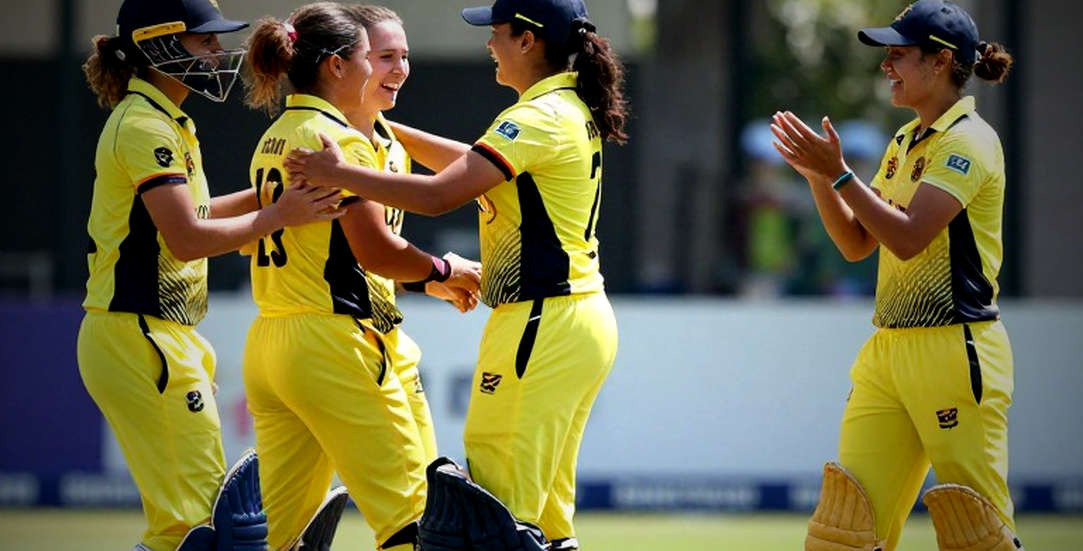
The most direct consequence is that playing for the national team is no longer the centre of a player's economic life. This produces a significant cultural contradiction. Across Asia, the popularity of cricket has always rested on national identity — an India-Pakistan fixture is not merely sport but a field of politics and emotion. Yet the economic engine that turned those emotions into a global product is now displacing the very national contests that created it.
The League System: Three Centres, One Labour Market
The new geography of Asian cricket has three layers. The first is India, where the IPL is not only the largest domestic tournament but also a financial reference point for boards worldwide. The second is the Gulf — leagues powered by UAE and Saudi investment that offer Asian players options that did not exist a decade ago. The third is the most underrated: the domestic competitions of Sri Lanka, Bangladesh, Nepal and Afghanistan, which no longer merely prepare players for national teams but also produce cheap, efficient talent for foreign leagues.
What connects these layers is the player-contract structure. A 24-year-old Sri Lankan spinner can now play in three different countries' leagues in a single year, and the largest share of his income comes not from a national contract but from franchise deals. For the player this is freedom; for the national board it is a crisis of control. When a player's livelihood depends on franchises, the board's instruments for discipline shrink — pressure to skip a league through injury, to take a break from a bilateral series, or to avoid national duty under the guise of workload management.
This is no hypothetical threat. In recent years several Asian boards have had to concede that their leading fast bowlers and all-rounders missed bilateral series because of year-round league commitments. Boards label this workload management, but it is in reality an acknowledgement of a new balance of power.
National Teams: Fewer Matches, More Pressure
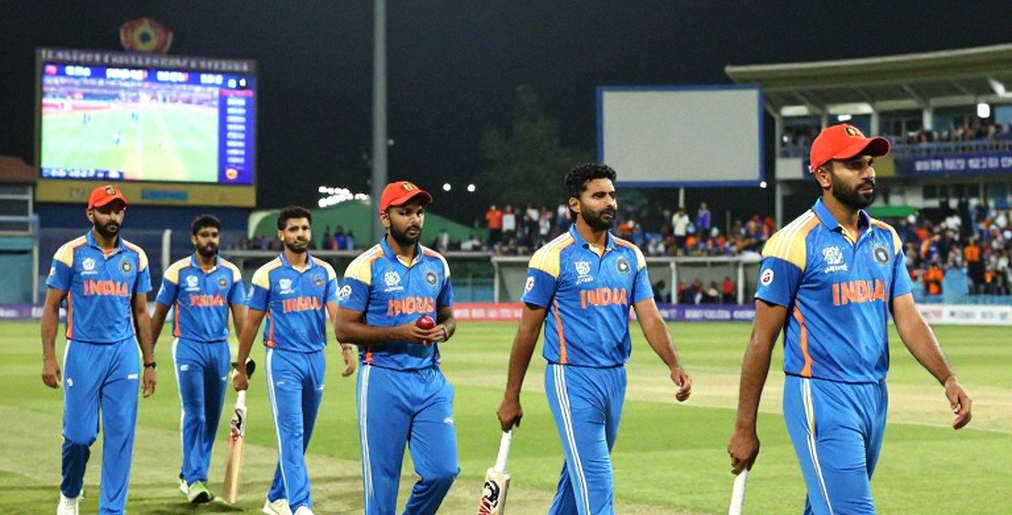
The paradox is that as league cricket expanded, national teams did not play fewer matches — they played more concentrated ones. The ICC's future tours programme has compressed bilateral series while expanding World Cups and regional tournaments. National teams therefore have less preparation time, while the stakes of every match have grown. Ranking points, direct World Cup qualification and shares of broadcast revenue all rest on a handful of fixtures.
For India the situation is especially complex. It has the deepest player pool in the world and the most crowded calendar. IPL, domestic competitions, bilateral series and ICC events — managing all of it places pressure on team management, and that pressure falls hardest on fast bowlers. For any Asian side, this is the biggest structural weakness: fast-bowling depth.
Pakistan's challenge is different — not a shortage of talent but administrative instability and a lack of continuity in domestic structure. Bangladesh has improved its domestic cricket in recent years, with visible effects on national-team stability, though its capacity to seize decisive moments at the top level remains limited. Sri Lanka's struggle is the most interesting: it has technically the most refined players, but economic crisis and administrative turmoil have weakened its talent pipeline.
The Afghanistan Model
Afghanistan is the outlier in this landscape and deserves to be read seriously. A country without a secure domestic structure or a large broadcast market made T20 cricket the vehicle of its national identity. Afghan players earned places in global leagues and carried the experience, fitness standards and mental resilience back into the national team.
The model demonstrates that league cricket is not merely the opponent of national cricket; for countries without traditional resources it can be a gift. The difference is that Afghanistan institutionally connected league talent to its national structure, while some other boards left that connection to individual initiative.
The Impossible Arithmetic of the Calendar
The international calendar has become a mathematical problem. There are ICC global events on one side, franchise league windows on another, and domestic competitions that produce national players on a third. Fitting all three into one year is impossible, so every board must set priorities. And when economics sets priorities, domestic first-class cricket is cut first.
This should be Asian cricket's central long-term concern. Test cricket and first-class cricket are the laboratory in which technique develops, patience forms, and the physical and mental capacity required for the long format is built. If first-class matches continue to shrink from domestic calendars, Asian teams will within a decade lack batters capable of saving an innings on a fourth-day pitch.
The Bowling Crisis
The clearest signal appears in bowling. T20 cricket made spin popular but bent it in a specific direction — fast, flat, googly-centred. The traditional identity of Asian spin, built on flight and turn, is being marginalised. Young spinners who succeed in leagues today possess exceptional defensive skills, but the art of trapping a batter on the fourth day of a Test is less visible in them.
In pace bowling the situation is harder still. Asia once produced generations such as Wasim Akram, Waqar Younis and Zaheer Khan who endured at the top for a decade. Today's fast bowlers are caught in a triangle of league calendars, injury management and format specialisation. No board can keep a fast bowler across all three formats for long, which is why Asian teams tour abroad with inexperienced attacks.
Administration and the Balance of Power
Asian cricket's administrative structure has not changed to match this economic shift. The Asian Cricket Council has historically been a coordinating body rather than a regulator, while real power rests with the boards that command the largest broadcast markets and strongest domestic leagues. That inequality is natural, but one consequence is that smaller member countries have very little space to defend their interests.
Asian influence within the ICC has grown in recent years, and that is rational — influence should track financial contribution. But it does not follow that the distribution of benefits should track it equally. For associate nations, ICC financial support is the primary source of development funding, and the concentration of major-event revenue in large markets erodes that support over time.
Women's Cricket: The Fastest-Growing Sector
If there is one unambiguous positive in this landscape, it is women's cricket. The Women's Premier League gave Asian women's cricket a platform it never had — not only for Indians but for Sri Lankan, Bangladeshi and other Asian players. The effect is appearing in national-team performance, and most importantly it created an economic base for domestic women's cricket that previously depended solely on board grants.
But the same inequality is being reproduced. In countries without their own women's franchise league, players have only the route of foreign leagues, where places are limited. The expansion of women's cricket will be sustainable only when two or three independent women's leagues stand up within Asia, rather than dependence on a single central league.
Los Angeles 2028 and a New Market
Cricket's return at Los Angeles 2028 opens a new direction for Asian cricket. The Olympics mean more than an additional tournament — they mean government funding, sports-ministry involvement, and reach into countries where cricket is not traditionally played. For Asian boards this is an opportunity to strengthen domestic structures to Olympic-compatible formats.
But the warning is equally clear. Olympic preparation will require a dedicated camp of six to eight weeks, and that is precisely the period that is most valuable in the league calendar. Without coordination between boards and leagues, the Olympics will become another front in the same conflict now playing out between national duty and franchise commitments.
Conclusion: Three Possible Paths
Asian cricket faces three clear scenarios.
The first is unregulated expansion. Leagues keep growing, the calendar fills further, domestic first-class cricket shrinks, and national teams gradually become centres of short-format specialisation alone. This is the most likely path because nobody loses anything immediately.
The second is institutional coordination. Boards and leagues together create a binding window system in which a fixed period each year is reserved for national teams and first-class cricket. This is difficult but not impossible — and it is the only path on which both systems can coexist.
The third is two-tier cricket. A small group of Test-playing nations preserves its structure while the rest move toward a T20-centred model. This would be the most unequal outcome and would damage Asian cricket's collective identity most severely.
The decision depends on how seriously Asian boards take their collectivity. League cricket has given Asia a global influence it never had — the question now is whether that influence will save the game that produced it.
Key Points at a Glance
- The centre of economic power in Asian cricket has shifted toward domestic leagues.
- National teams play fewer matches, but each match matters more.
- Domestic first-class cricket is the most exposed.
- Afghanistan offered a model for converting league experience into national structure.
- Fast-bowling depth is the continent's biggest structural weakness.
- Women's cricket is the fastest-growing sector, but centralised dependence remains a risk.
- The 2028 Olympics will bring both opportunity and conflict.
- The solution is not technical but political: a collective agreement on the calendar.